
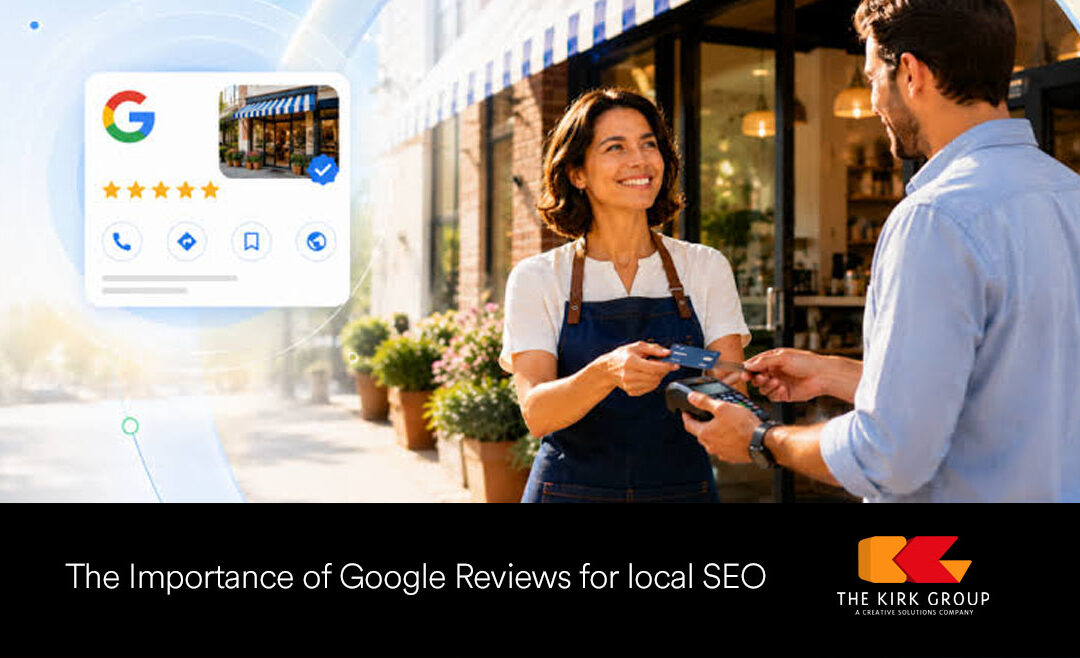
Google Reviews influence Google Business Profile visibility across Google Maps, Google Search results, and the Local Pack, where three relevant businesses can appear on a map. Reviews account for an estimated 15.44% of local SEO ranking factors, although Google doesn’t disclose the exact weight of review signals. Rating, volume, recency, relevance, and responses all matter, but no single review threshold guarantees a top position. [1]
- Google uses reviews as a local SEO ranking factor, and businesses with many positive reviews are more likely to appear in local search results. [2]
- The Local Pack consists of the three most relevant results for a search query, with their locations marked on a map. [3]
- Google says local results are mainly based on relevance, distance, and popularity. [4]
- Google Reviews are described as a free way to improve local search rankings and build trust with potential customers. [5]
The Importance Of Google Reviews For Local SEO
Google Reviews influence local search visibility because Google uses reviews as a local SEO ranking factor, and businesses with many positive reviews are more likely to appear in local search results. [2] Good, recent reviews can improve a business’s presence in Google Maps, Google Search results, and the Local Pack. [6]
The Local Pack consists of the three most relevant results for a search query, with their locations marked on a map. [3] Google says local results are mainly based on relevance, distance, and popularity. [4] Reviews therefore work alongside proximity and business relevance rather than replacing them.
Published estimates put reviews at approximately 15.44% of local SEO ranking factors or roughly 17–20% of Local Pack ranking factors. [1] [7] Those figures are estimates, not Google’s published formula. Google doesn’t disclose the exact weight of each local ranking signal. [8]
Which review factors matter most for local SEO?
Google review factors identified as influencing local SEO include overall star rating, review volume, recency, responses, and quality. [9] Relevance matters too: Google scans review content for relevant keywords and comments, then displays some of that language as local justifications in map-pack results. [9]
Detailed, specific reviews that include supporting media can help a business rank higher on Google. [9] Reviews that mention relevant services or products may also help a business appear in more targeted searches. [6] That makes genuine customer feedback more useful than vague praise.
Old reviews can indicate that a business is inactive or isn’t attracting customers. [9] A consistent flow of new reviews is described as better than one-time bursts. [10] Regular responses can improve local search ranking, while also showing that the business values feedback. [9] Google doesn’t disclose the exact weight of any factor, and the importance of recency varies by market. [8]
How many reviews and what star rating does a business need to compete?
No universal review count or average star rating guarantees a top local ranking because local results depend on competing signals, including relevance, distance, popularity, and review factors. Google doesn’t publish a fixed threshold. [8] A business with reviews and a 4.5 average rating can rank below one with reviews and a 4.1 average rating. [9]
Google Maps defaults to a 4.0-and-above rating filter when someone searches for the best business in a locality. [9] Guidance in the ledger says most businesses should aim for at least 4.0 stars, while 4.2 to 4.7 tends to earn the most trust. [5] That is a practical benchmark, not a ranking rule.
I’d compare a business’s review volume, average rating, and review recency with nearby competitors rather than chase a fixed number. A competitor with recent five-star reviews may have an advantage over a business with eight reviews from two years ago. [5]
Does getting Google reviews cost anything, and what practices comply with Google’s policies?
Google Reviews are described as a free way to improve local search rankings and build trust with potential customers. [5] Google also says businesses can’t request or pay for a better local ranking. [4] The cost question is therefore separate from the work involved in asking customers, monitoring feedback, and responding.
Businesses shouldn’t offer gift cards or discounts for positive reviews, purchase reviews, write their own reviews, or ask friends and family to review them unless those people are actual customers. [5] [5] Businesses also shouldn’t offer incentives or selectively solicit positive feedback. [11]
A compliant request asks real customers for honest feedback rather than asking only for a positive rating. [5] Businesses should ask all customers and shouldn’t filter out or discourage unhappy customers from leaving public feedback. [3] Review gating is not allowed. [5] The safest approach is simple: make honest feedback easy, without attempting to manipulate the outcome. [11]
What step-by-step process can a local business use to ask for genuine reviews?
A local business should first claim and fully complete its Google Business Profile before asking customers for reviews. [5] An accurate, complete profile gives customers the place where they can review the business.
- Train staff. Customer-facing employees should ask politely after a successful interaction or positive customer experience, using a friendly, non-intrusive approach. [2] [2]
- Create the link. Google Business Profile Manager provides a direct review link through the Home tab and the “Get more reviews” or “Ask for reviews” option. [5]
- Send the request. Follow-up email or text can include the direct link. Physical businesses can also use receipts, signs, or QR codes. [2] [2]
- Keep the pace natural. Spread requests over time rather than asking everyone at once, and don’t pressure customers to leave a positive rating. [5] [11]
How should a business respond to negative or fake reviews?
A business should respond to negative reviews within two hours whenever possible. [2] A useful response acknowledges the concern, offers a sincere apology where appropriate, invites offline contact, and gives the customer a practical next step. [2] [5] [11]
Replies should stay calm, brief, friendly, respectful, and professional. Defensive or dismissive language can make the public exchange harder for prospective customers to interpret. [2] Review responses can affect consumer decisions: 85% of surveyed U.S. consumers said responses to negative reviews influence their decision-making process. [3]
The ledger doesn’t provide Google’s specific process for requesting removal of fake, defamatory, abusive, or policy-violating reviews. I therefore can’t present a removal procedure as known. Businesses can still document the issue internally and respond professionally without accusing a reviewer publicly. The available evidence supports prompt, respectful review responses, not a guaranteed removal outcome. [5]
What measurable business benefits can positive Google reviews produce?
Positive Google Reviews can provide social proof, build trust and credibility, influence consumer purchase decisions, and encourage customers to choose one business over competitors. [6] [6] Businesses with positive reviews are also more likely to receive website clicks and engagement on location-specific pages. [9]
Review responses add a customer-care dimension. Responding to reviews can build stronger customer relationships and increase loyalty. [6] That feedback can also inform customer satisfaction work, although the ledger doesn’t provide a universal satisfaction score or benchmark.
A reported dental-practice case study found that review volume increased by 35% after customers saw the practice engage with existing reviews. [1] The practice’s Google Business Profile click-through rate rose by 42%, leading to more appointment bookings. [1] Those results are a reported example, not a general forecast. The ledger doesn’t provide a general revenue figure for Google Reviews; it separately cites a 5–9% revenue increase associated with a one-star Yelp rating increase. [1]
How can a business track whether its review strategy is working?
A practical review-monitoring dashboard should record review volume, average rating, review recency, review responses, local rankings, Google Business Profile activity, website traffic, and conversions. [11] Tracking these measures together makes it easier to compare review performance with visibility in Google Search results, Google Maps, and the Local Pack.
Review trends should be compared with ranking and map visibility over time, not treated as proof that reviews alone caused a change. Available evidence describes visibility dropping after reviews stopped, then local search performance climbing after new reviews arrived regularly. [8] [8] Stronger geo-grid visibility also accompanied an improvement in local-map position. [8]
A CRM connection can send review requests after completed transactions and tie those requests to customer records. [9] Competitor review trends should be monitored as well, with the strategy adjusted to maintain a Local Pack presence. [8] The ledger provides no specific benchmark for calls, direction requests, revenue attribution, or conversion rates, so those require business-specific tracking.
| Compared entity | Rating benchmark | Reported effect |
|---|---|---|
| Google Maps [9] | 4.0-and-above [9] | Google Maps defaults to a 4.0-and-above rating filter when someone searches for [9] |
| Customers [9] | at least a four-star rating [9] | Customers are most likely to trust businesses with at least a four-star rating. [9] |
| Most businesses [5] | at least 4.0 stars; 4.2 to 4.7 [5] | Most businesses should aim for an average rating of at least 4.0 stars, while ra [5] |
| Businesses with average ratings of 4.5 stars and above [7] | 4.5 stars and above [7] | Businesses with average ratings of 4.5 stars and above are more likely to rank h [7] |
| Study or source | Review-related measure | Reported result |
|---|---|---|
| nationalbusiness.org [2] | A strong collection of positive reviews [2] | can increase a business’s visibility in Google search results and attract more l [2] |
| A study highlighted by Bird Marketing [1] | local SEO ranking factors [1] | reviews account for approximately 15.44% of local SEO ranking factors. [1] |
| reviewpush.com [7] | Local Pack ranking factors [7] | Reviews account for roughly 17–20% of Local Pack ranking factors. [7] |
| A Sterling Sky study [8] | visibility [8] | visibility dropped after its reviews stopped coming in. [8] |
| The source [8] | local search performance [8] | After new reviews began arriving regularly, the business’s local search performa [8] |
| The source [8] | visibility across the geo-grid map [8] | stronger visibility across the geo-grid map accompanied an improvement in the bu [8] |
Key Takeaways
- Treat rating, review volume, recency, relevance, quality, and responses as connected local SEO signals rather than chasing one number. [9]
- Ask real customers for honest feedback without incentives, review gating, or selective solicitation. [5]
- Spread review requests over time and make them easy through direct links, email, text, receipts, signs, or QR codes. [5] [2] [2]
- Respond to negative reviews promptly, calmly, and professionally, using a practical next step where possible. [2] [5]
- Track review performance alongside rankings, Google Business Profile activity, website traffic, and conversions, while treating correlation as distinct from causation. [11] [8]
Frequently Asked Questions
Are Google reviews important for SEO?
Yes. Google uses reviews as a local SEO ranking factor, and businesses with many positive reviews are more likely to appear in local search results. [2] Reviews also affect visibility in Google Maps, Google Search results, and the Local Pack. [6]
What is the/20 rule in SEO?
The ledger doesn’t define an/20 rule in SEO. It does report estimates that reviews account for approximately 15.44% of local SEO ranking factors or roughly 17–20% of Local Pack ranking factors. [1] [7]
How many star reviews does it take to increase Google rating?
The ledger doesn’t provide a formula or universal number of five-star reviews needed to increase a Google rating. A business with reviews at 4.5 can rank below one with reviews at 4.1, so volume and rating should be compared with nearby competitors. [9]
Is there any benefit to leaving reviews on Google?
The documented benefits primarily apply to businesses: positive reviews can provide social proof, build trust, influence purchase decisions, and support website clicks. [9] [6] The ledger doesn’t identify a separate benefit for the individual customer who leaves a review.
Sources
- Local SEO: The Importance of Responding to Google Reviews (2025-02-27)
- The Importance of Google Reviews for Small Businesses (2024-11-04)
- How Reviews Impact Local SEO (2026-02-10)
- Tips to improve your local ranking on Google
- How to get Google Reviews for Local SEO Success (2025-04-01)
- 8 reasons why Google reviews matter for your local business (2024-06-03)
- Do More Google Reviews Impact How My Business Ranks in the Google Maps Search Results?
- Does Review Recency Matter for Your Local Search Rankings? (2025-11-21)
- How Google reviews help search rankings and SEO I Birdeye (2022-12-22)
- The Role of Customer Reviews in Local SEO (2025-10-08)
- Why Reviews Are the Key to Local SEO Success (and How to Get Them) (2026-08-28)